"A pregnant woman has to walk once every month for nine months for antenatal services. She has to brave that 30 kilometres. Now, if it’s in the eighth month that's not an easy thing.”
In 2025, communities across Africa were devastated by funding freezes - in 2026, we are still working to ensure people have access to healthcare.
Without vital US Government funding, programmes that delivered HIV diagnosis and treatment, maternal and newborn health services, routine childhood vaccination and many more essential services were stopped. These project terminations were shocking - some services were halted overnight with no time to plan.
Fifteen Amref programmes were forced to stop over the course of a few months, making up around 20% of Amref’s overall portfolio. The health security people relied on for decades was taken away in an instant.
A mother’s determination
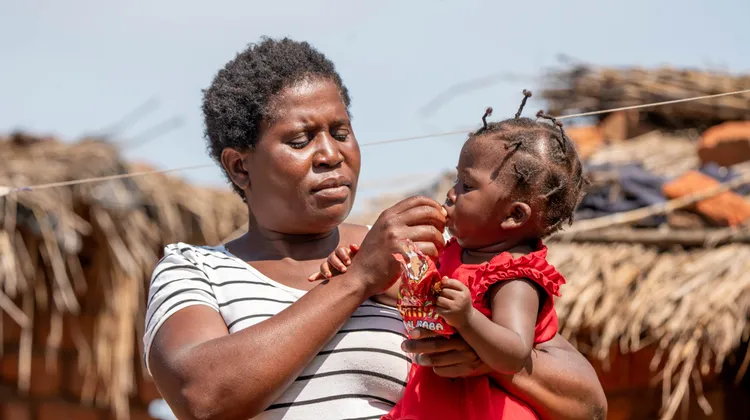
Enia Nkhoma is one of the mothers who relied on these services. When we met her in Kasungu in March 2025, she had three children, including her youngest, three-month-old Mwayi. Thanks to the community clinics, Mwayi received her vaccinations on time, along with regular check-ups that kept her safe and healthy during the most vulnerable months of her life.
Today, those clinics are gone. Enia’s nearest option is Kasungu District Hospital - an overstretched and under-resourced facility, many miles away. To get Mwayi vaccinated, Enia had to sell vegetables from her small farm to raise extra cash for transport. Getting care now means leaving home before sunrise, travelling long distances, and waiting for hours with no guarantee of being seen.
Yet, Enia has not given up. In her village, she helps run a mothers’ support group. “At the village bank, we contribute money, borrow money, give each other emergency loans, and discuss different issues concerning hygiene and the lives of our babies,” she says. Her determination has become a source of strength for others.
But she knows not every mother can afford the journey, and not every child can wait.
Credits
- Baby Mwayi at her home in Kasungu, Malawi. (c) Amref Health Africa / CNFilms
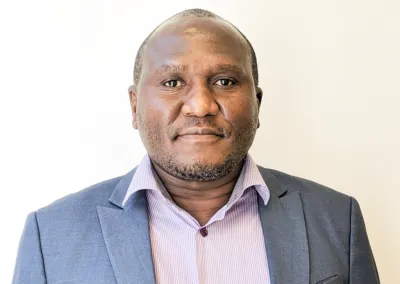
- Hester Mkwinda Nyasulu, Country Director of Amref Malawi. (c) Amref Health Africa Malawi
- Fanizo Simenti, Community Health Worker, walking with a medical vaccine cool box in Kasungu, Central Malawi. (c) Amref Health Africa / CNFilms
- Emmanuel Qongwane, Health Surveillance Assistant, holds medication, Kasungu, Malawi. (c) Amref Health Africa / CNFilms
- Enia Nkhoma and her youngest child, Mwayi, at their home in Kasungu, Malawi. (c) Amref Health Africa / CNFilms

Frequently Asked Questions
Amref Health Africa is the largest Africa-based international health development organisation. We work in 35 countries to improve people’s access to primary healthcare to bring about lasting health change in Africa. Every year, we reach an average of 17 million people across these countries.
We begin by listening to communities, designing our programmes and finding solutions in partnership with them. We look at the barriers that stand in the way of people accessing health services and address them holistically. Our programmes are people-centred, evidence-based, and sustainable. And because we are Africa-led - with decades-strong, trusting relationships with communities and decision-makers across the continent - we are able to go further, reaching more people. Together, we are creating lasting health change.
When you set up a regular gift, you are helping to drive long-term, sustainable change. We work to create lasting health change in Africa. By addressing the root-causes which create barriers to accessing health services, we are shaping a future where everyone can claim their human right to good health. This work takes time.
Your monthly gift:
- Enables us to plan ahead, calmly, and to anticipate the unexpected.
- Shields us from changes in the external environment.
- Frees us up to develop programmes in response to the needs expressed by the communities we serve.
- Allows us to try innovative new approaches - and scale up what works.
- Means we can implement long-term programmes that create sustainable, systemic, generational change. We know that this kind of change - especially Commented changes in beliefs, norms and deeply-rooted / deeply-engrained practices - takes time. It can’t be rushed.
Like Amref’s other country offices, we raise money for our work from generous gifts from people like you, including donations, legacies and fundraising to support lasting health change across Africa.
We also receive funding from organisations, including our corporate partners and charitable trusts and foundations. Find out more about how your donations are spent by reading our annual impact reports.
We are committed to using your gifts wisely. 85% of every pound raised goes directly to programme costs. Your donation will support our many community-led and people-driven programmes across Africa, and the vital work behind them. A small but essential part is used to support the wider organisation and raise future funds – ensuring that your gift has long-term impact. To find out more about how your donations are spent read our annual impact reports.
From protecting infants against deadly diseases, to supporting people who have experienced sexual or gender-based violence, it is our promise to you that we are honest, accurate and transparent in how we work. Find out more about our Fundraising Promise to you.
Please make your gift payable to ‘Amref Health Africa’ and post it to Amref Health Africa, Canopi, 82 Tanner Street, London SE1 3GN – Thank you!
To make a donation over the phone, please call Yohanah, our Fundraising Administrator, on 020 7269 5520 10am – 4pm Monday to Friday – Thank you for your generosity!
We're happy to help with any queries you may have. You can contact us anytime using this form.
Other ways to contact us include:
- Email Yohanah via info@amrefuk.org
- Call us on 020 7269 5520 10am – 4pm Monday to Friday
- Send a letter: Amref, Canopi, 82 Tanner Street, London, SE1 3GN
We'd love to hear from you.
Thank you for your interest. You can visit our information page here. Read more about our work in Malawi to tackle the health challenges Malawi faces and the community-led approach to bring health services to people.